Total Pageviews

12/20/2018

SPORT IS FOR ALL , 3rd December - Disability day in Aver o Mar school, Portugal

In Aver-O-Mar schools there were several activities to rise awareness to the topic.
Some students prepared and acted out a school play; others had seminars in school  followed up by handworking to show their fellings, thoughts and sensitivety towards the subject and the knowledge they had acquired.
They talked about being different, some main disabilities and difficulties, inclusion, solutions and friendship.
In the mainstream school students had a different Physical Education moment: they played Boccia games with the "pros" - which means the Boccia Local Team. A group of SEN athletes came to school to teach and play.
Students also played other games as if they had some kind o disability, for example, having one leg, not being able to use their legs at all or having their eyes covered. This way they were able to feel and experience disability.


           (click for the SPORT IS FOR ALL Interactive Digital Image )


Here are some pictures:


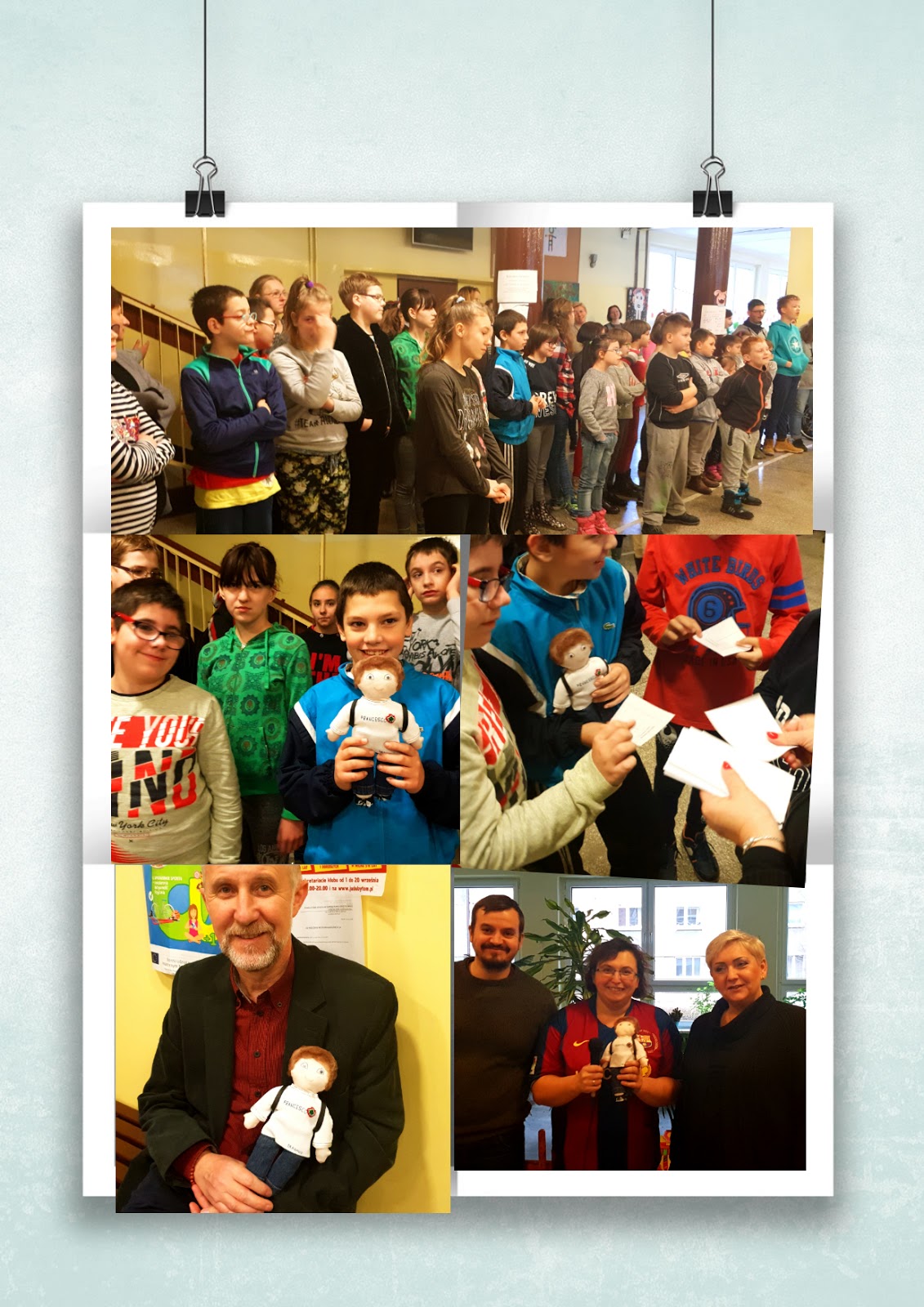
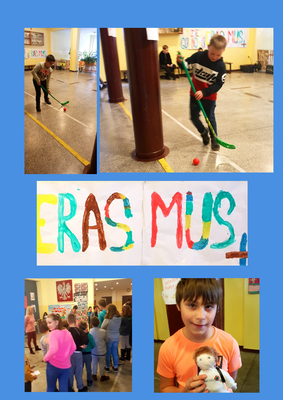
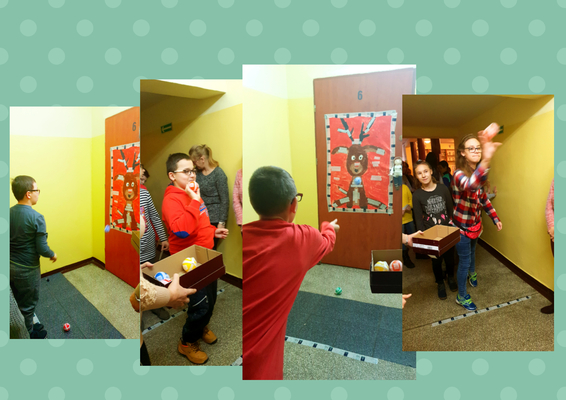
3rd of December is International Day of Persons with Disabilities in Szkola Podstawowa Specjalna nr 40, Bytom, Poland

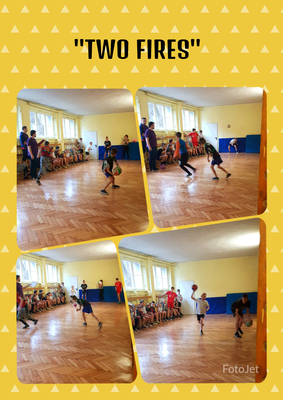
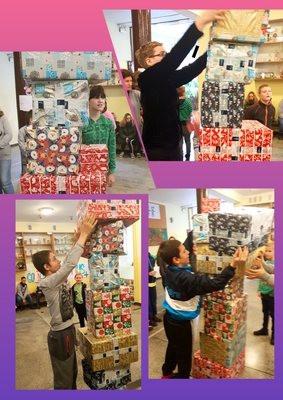
In our school everybody likes physical activities. So this year we decided to celebrate an International Day of Persons with disabilities as a sport day. The youngest kids were taking part in competitions like obstacle course, builiding a tower of presents or going through a tunel to get a certificate of Santa Claus Helper. The older students had a “two Fires” tournament. All pupils had a great time. We're looking forward next year's competition.


12/19/2018

International Day of Persons with Disabilities - Szkoła Podstawowa Nr 40 Bytom, Poland

3rd of December is International Day of Persons with Disabilities

In our school everybody likes physical activities. Do this year we decided to celebrate an International Day of Persons with disabilities as a sport day. The youngest kids were taking part in competitions like obstacle course, builiding a tower of presents or going through a tunel to get a certificate of Santa Claus Helper. The older students had a “two Fires” tournament. All pupils had a great time. We're looking forward next year's competition.


12/17/2018

Impressions of the Italian team on education at Metin Sabanci School in Istanbul


The visit to the Special School Metin Sabanci on the first day of the Turkish mobility was for the Italian team a strong experience from a psychological point of view, since Special schools and separate classes were abolished in Italy in 1977 through Law 517, which prescribed to attivate “procedure to integrate handicapped pupils by providing special teachers”. Italian pupils with disabilities generally attend mainstream schools, in the ordinary sections and classes at all educational levels.
However, after the fist impression, the attention of the Italian teachers focused on impeccable aspects that characterize the partner school and its curriculum. The Italian teachers were impressed by the small number of pupils and high number of teachers in each class, not only in Metin Sabanci School, but also in other Turkish Special schools. This means closeness, care, attention to the needs of each student. Onother relevant aspect in the curriculum of Metin Sabanci School was the stress on all the senses, while occidental schools tend to give importance to listening and speaking.
 Turkish Special schools try to develop basic life skills in their students with medium and severe disabilities. Goals and targets of Metin Sabanci School is in fact to enable its students to be self-sufficient, to make them independent as possible as they can be, to make them be aware of themselves  and what they can do, to ensure integration with society. For this purpose the school consists of a kitchen workshop, a technology-supported training room, guidance rooms, a sensory integration room and a library. There are application houses  (kitchen and bedroom) in many special schools. Each special school has got a gym and a relax room. Moreover some of them have got rooms for leisure activities such as cinema, music... The curriculum of special schools is centred on practical activities. One of the activity planned by the Turkish Erasmus team was the visit to vocational schools, whose goal is to train students to practice crafts. Students have the opportunity to attend art (pottery), kitchen, sewing and carpentry (woodworking) laboratories. In this case schools  represent a spingboard for their entry into the world of work.
On the one hand the learning-teaching process is focused on senses and pratical activities, on the other hand technology plays a crucial role in removing all barriers and offering all facilities. These two opposite poles represent the perfect combination to fight early school leaving, to guarantee school success and a specific training for a specific future job.
Differently from the Turkish school system, the Italian one shifted  the focus from a clinic to a pedagogical view. SEN students, depending on the severity of their disability, are followed by support teachers, who are fully part of the teachers’ team of the classes and participate in all the activities concerning planning and assessment.  Schools constantly collaborate with families and the relevant offices of the National health system. The medical team that takes care for the SEN student doesn't work at school except for educators and, in some cases,  school psychologists. On the contrary, Metin Sabancy School is a foundation which provides diagnosis, treatment and rehabilitation for children and adults with Cerebral Palsy in addition to education services. There are teachers for mental disabled, master instructors, intern and caregivers outside the  classroom at Metin Sabanci School. This means a  closer, punctual and accurate relationship between teachers and specialists.
The European partners had the opportunity to observe and use  traditional and innovative tools at Metin  Sabanci School. The took part in IPad training sessions and knew specific apps.   They  had the opportunuty to observe innovative methodologies and strategies used by Turkish teachers and specialists  that can be replicated in their classes and that can contribute to foster psychological, didactic and pedagogical practices.
Senses, practice,  ICT and fun are the keys for inclusion for everyone!
                    Martina De Mico, Italian coordinator


Impression of Slovenian teachers and students on education at Metin Sabanci School in Istanbul

Our impressions from Istanbul have only partially fulfilled our expectations. We missed direct work with children with special needs, especially on the field of lower education standards and consequently the use of their didactic-methodical approaches and strategies.

In the Metin Sabath cerebral palsy training and educational centre we saw the use of technology and technological equipment of classrooms, and also some different gadgets and other modern technologies in the teaching process.
They were very hospitable. Soon we learned that they carefully protected their students - their basic rights and personal data. Consequently, we expected several examples of good practise in the field of lower education standards, some of us observed work in a special program where basic areas such as caring for themselves, feeding and developing basic motor skills were covered. We found out that our approach is either the same or perhaps better on some educational areas. We too encourage our students to use alternative communication using tablets and adapted computer programs.

When visiting some other institutions, we realized that when educating children, they follow their individual needs and skills. It impressed us that the children have the opportunity to spend free time between classes listening to music, watching TV and attending school cinema, which is also one of the best technological achievements and we would gladly have it in our school.
We also met the head of the ministry of Education who listened with interest how people with special needs are educated in each country. A representative of the Ministry of Labour and Social Affairs emphasized that families with children, who have intellectual disabilities, are provided with free bus services, free entries in cultural institutions, cinemas, …

A visit to the restaurant in Tebessit made a strong impression on us as employees are young people with Down's syndrome. Through encouragement of their mentors, they are actively involved in the work. We were nicely served.
Our students, who participated in the program, were impressed by the size of the city, the subway, the friendliness and hospitality. They made new friends from Poland, and enjoyed getting familiar with new technological tools and technology on general.

Tanja, Aleksandra, Vesna, Marija, Martin and Niki


12/12/2018

Croatian team impressions from Metin Sabanci school, Istanbul, Turkey


Impressions on working with children with developmental difficulties in Istanbul
The first school we visited was the project partner’s school within the Metin Sabanci Center. We were fascinated by the building and its surroundings on first sight. It was evident that it was designed with the needs of children with cerebral difficulties, who are the users of this institution, in mind. We liked the large park-like exterior around the buildings the most. There aren’t any privately funded institutions dedicated to the education of children with developmental difficulties in Croatia. Our special education schools are exclusively run by the state. We believe that, by allowing diversified sources of financing, the quality of life for the users is greatly improved.
Our hosts were exceptionally kind and forthcoming in presenting their working methods to us. We liked that the staff is comprised of people with disabilities, which is also the practice in Croatia.
Despite the circumstance that the Croatian team are a regular school and in our day-to-day work do not interact with students who have a large extent and degree of difficulties, we find that some of the experiences can be applied to our educational work. That pertains foremost to the application of technologies in teaching and introduction of methods used in sensory room. We have seen that the technology is used for motivation and for development of psychomotor abilities, and much less for presenting factual knowledge, and that is something to think about in the Croatan educational system. Some of our teachers had their first experience with a sensory room in Istanbul. All members of the team believe that every school should have such a room and that it benefits all children.
We were particularly impressed by the music teacher’s workshop Leadership Watch. Without the use of technology or any type of aids, simply by high-quality guidance a maximum result is achieved. To us that reinforces the belief that the person of the teacher is the most important element of education quality.
We are glad we had an opportunity to see a wide range of institutions, from private to state-run, regular and special education schools, which gave us an insight into the education opportunities for children with difficulties in Turkey. As far as we were able to see, the systems have many similarities, from inclusion in the regular system to specialized institutions for different types of difficulties. The differences we observed are a consequence of the higher possibility of private investment in all types of education.
It was our impression that, in the Turkish schools we visited, a warm-hearted human attitude towards the students and a great concern to enable the children to function in everyday life are the dominant features.


The pupils of the primary school in Montorio R. and Nerola, Italy, celebrated the Disability Day 3rd December.


The pupils of the primary school in Montorio R. and Nerola celebrated the Disability Day during the first week of December.

The children in Montorio played relay race, games with cones and hoops and took part in coding activities. The teachers of our institute planned coding activites linked to positive emotions.

The students of the primary school in Nerola celebrated this event through several steps:

1.watching the story ‘Piccolo Blu e piccolo Giallo’  (little Blue and little Yellow), a classic tale of friendship inspired to Leo Lionni's book. Little Blue and Little Yellow are best friends. They go to school and play everyday, but one day the cant’ find each other. When they finally do, they give each other such a big hug that they turn green! Their parents can’t recognize them and reject them. Not wanted in their one homes little Blue and little Yellow meet again and cry. Their tears change little Blue and little Yellow back to their original colors. Little Blue speeds off to explain everything to his parents who are so overjoyed that they go running across the street to tell little Yellow's parents. Then their parents end up hugging until they themselves turn green.

2. Playing treasure hunt- the students of the fourth grade had to solve riddles. If they answered correctly, the children of the third grade got the alphanumeric code they needed to complete the coding game, a big smiling face, the symbol of a happy SEN student included in his/her class.

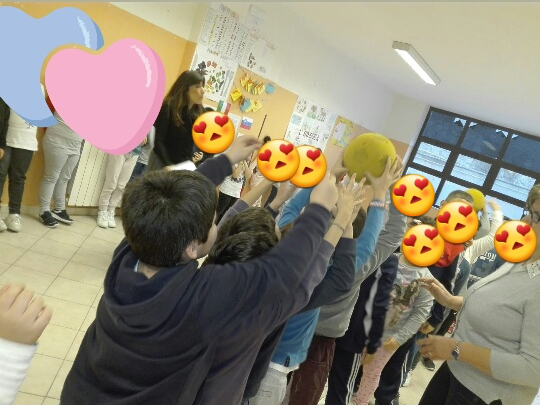
3. playing a variant of relay race. Each student of every team had to pass a sponge ball backwards with both hands to the classmate who was behind him/her as quickly as possible and then he/she had to reach the last position of the queue. The winner was the team whose members went back to the original position after running.

4. Listening to the story “Il futuro dei miei” (The future of my people), a book written by Alessandro Ghebreigziabiher that talks about a  boy and his uncle, two refugees who leave their own country to come to Italy seeking their fortune (peace, justice, food…), hoping to be integrated  into the Italian society.

5. Debating about the video and the short story read by the teacher.
The fil rouge of all these activities was inclusion, integration, acceptance of diversity through games, movement, fun and positive emotions.